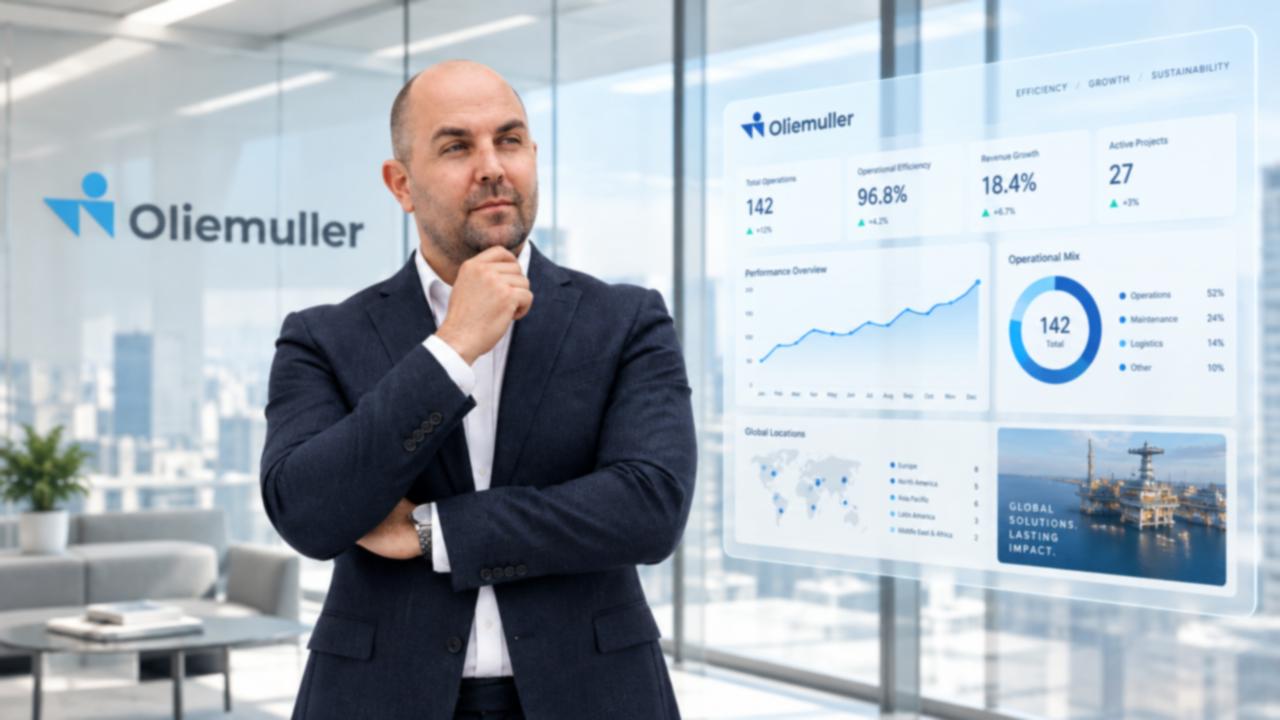
When I first stepped into the CEO role at my second startup, I thought I had the scaling playbook memorized. The reality hit me hard during my first quarter. I spent the first six months putting out fires I did not even know existed. We were bleeding cash while our churn rate was quietly creeping up. My leadership team was completely misaligned. This chaos forced me to reevaluate everything and discover the true power of AI-driven continuous improvement. The strategies that got us to ten million dollars in revenue were actively sabotaging our path to one hundred million. I realized that brute force scaling no longer worked.
Over the last fifteen years, I have navigated three major acquisitions and ultimately managed a global team of over eight hundred people. I learned that the breaking point almost always happens in middle management. Leaders often assume that simply buying new software will solve deep operational flaws. Technology alone cannot fix a broken culture. You need a structured approach that marries advanced analytics with actual human capability. Today, I want to walk you through the exact restructuring framework I used to stop our churn and realign our operations.
The reality of AI-driven continuous improvement
Most executives misunderstand what digital transformation actually means in practice. They purchase expensive dashboards and expect instant results. True transformation requires a fundamental shift in how your organization processes reality. I will show you the mistakes I made so you do not have to repeat them. My biggest error was treating technology as a replacement for leadership rather than a facilitator. We implemented predictive tools but failed to train our directors on how to interpret the data. We ignored the underlying operational bottlenecks entirely. Utilizing rigorous Lean Six Sigma diagnostics would have identified our core process flaws before we overlaid new software. We tried to automate broken workflows instead of repairing them first. This shortcut created a chaotic digital environment that confused our employees and frustrated our clients.
I eventually realized that data is useless without a unified leadership perspective. This is why AI-driven continuous improvement must start at the boardroom table. You must align your executive team on a single version of the truth before rolling out new directives. When your chief operations officer and your chief revenue officer look at different metrics, friction is inevitable. We solved this by creating a unified data ecosystem that exposed our operational bottlenecks clearly. This transparency allowed us to address the root causes of our scaling pains rather than just treating the symptoms. A true digital operations transformation requires re-engineering fragmented customer journeys into a cohesive system. We had to break down the silos between departments to create a single workflow.
Finding an authoritative perspective on this transition is crucial for modern executives. You can explore McKinsey’s insights on operational excellence to see how leading organizations navigate these exact challenges. Industry leaders agree that scaling requires a balance between algorithmic intelligence and executive intuition. You cannot automate empathy. Instead, leaders must automate the administrative burden that prevents their team from exercising it. Human connection remains the ultimate currency in complex business relationships.
Why operational excellence leadership models break
The gap between ten million and one hundred million dollars reveals every hidden crack in your foundation. Traditional operational excellence leadership models often fail because they rely on static reporting. Managers wait for end-of-month reports to make critical decisions. In a hyper-growth environment, a month is a lifetime. Your competitors will outmaneuver you while you are still analyzing last quarter’s performance. I experienced this firsthand when our delay in addressing customer friction cost us three major enterprise accounts.
This painful lesson forced me to look deeper into our organizational structure. Middle management became a massive bottleneck because they were overwhelmed with administrative compliance. They spent their days policing workflows instead of coaching their teams. We needed a centralized system that surfaced insights automatically. Giving our managers real-time visibility changed the entire dynamic of our weekly meetings. Conversations shifted from defending past failures to predicting future opportunities.
Implementing an AI-driven continuous improvement system
Building a resilient organization requires more than just deploying smart algorithms. You must weave these insights into the daily habits of your workforce. An effective AI-driven continuous improvement system acts as a central nervous system for your business. It detects anomalies in your customer journey before they escalate into cancellations. Our turnaround began when we stopped looking at lagging indicators and started tracking behavioral precursors to churn. This predictive approach gave our customer success team the runway they needed to intervene effectively.
To truly stabilize your growth engine, you have to look beyond surface-level fixes. I highly recommend stopping churn and building indestructible customer relationships as a core operational philosophy. We integrated this mindset by linking our predictive risk scores directly to account manager compensation. Alignment happens incredibly quickly when financial incentives match operational goals. Our team stopped making excuses and started making proactive phone calls.
Overcoming bottlenecks with AI-driven continuous improvement
Scaling exposes the profound fragility of human communication within a growing hierarchy. Middle managers are the vital glue that holds a scaling company together. When they break, the entire operational floor collapses rapidly. I watched brilliant individual contributors fail miserably when promoted to management because they lacked systemic support. They were drowning in manual client escalations every single day. We had to automate the triage process so they could focus on actual leadership.
We achieved this milestone by deploying intelligent routing for internal requests. The automated system categorized and prioritized issues based on historical resolution data. This simple structural change freed up twenty hours a week for my regional directors. They used this newly reclaimed time to actively mentor their direct reports. This shift proved that true operational efficiency is not about making people work faster. It is about removing the friction that prevents them from working smarter.
Integrating human-centric lean leadership
You cannot deploy advanced analytics successfully without a strong cultural foundation. This is where human-centric lean leadership becomes the critical differentiator for scaling companies. Lean methodologies traditionally focus almost exclusively on eliminating waste and reducing variance. Taking a human-centric approach means recognizing that your employees are your most valuable problem solvers. You must empower them with transparent data, not micromanage them with rigid algorithms. I learned to ask my team what the data meant to them rather than dictating solutions.
This collaborative mindset completely transformed our entire corporate culture. People stopped hiding their mistakes and started actively highlighting systemic process failures. We proudly celebrated employees who found hidden inefficiencies in our legacy systems. This deep psychological safety is the absolute bedrock of rapid iteration. You must actively foster an environment where the company rewards uncovering a problem just as highly as solving one.
The three metrics of AI-driven continuous improvement
I now look at three specific metrics every single morning before I even open my email. These core numbers tell me everything I need to know about the health of our scaling engine. The first vital metric is the velocity of value delivery. This precisely measures how long it takes for a new client to achieve their first measurable win. If this specific number creeps up, we instantly know our onboarding process is breaking under volume.
The second metric focuses heavily on relational depth and client engagement. We track the frequency and overall quality of executive-level interactions with our core accounts. Algorithms can successfully flag a risk, but only a human can rebuild trust over a genuine dinner conversation. The third essential metric is our internal friction index. This mathematical score quantifies how many manual touchpoints are required to resolve a standard customer ticket. Lowering this index remains the primary goal of our daily automation efforts.
Creating a Kaizen business transformation strategy
Focusing on daily incremental progress is far more effective than attempting massive quarterly overhauls. A successful Kaizen business transformation strategy relies entirely on compounding small operational victories. We rigorously trained our entire staff to identify one tiny inefficiency every single week. This remarkable compound interest of optimization revolutionized our entire cost structure. Small daily adjustments in our billing workflow alone saved us hundreds of thousands of dollars over two years.
Achieving this impressive level of synergy requires a highly deliberate architectural design. You can learn more about how to create strategic synergy between people, technology, and growth to accelerate your own corporate initiatives. We intentionally built cross-functional operational squads that paired data scientists with frontline customer service agents. This unique combination of technical capability and practical human experience ensured our solutions actually worked in the real world. We finally stopped building software features in a vacuum.
AI-driven continuous improvement and efficiency strategies
Hyper-growth is deeply intoxicating but often financially lethal if left completely unchecked by leadership. You absolutely need sustainable operational efficiency strategies to ensure your margins grow alongside your top-line revenue. I have unfortunately seen too many founders celebrate massive revenue growth while their operating costs spiral wildly out of control. We decisively implemented strict yield governance frameworks to carefully safeguard our long-term profitability. Every single new technological investment had to clearly prove its direct financial impact on our bottom line within ninety days.
This highly disciplined approach aggressively forced us to prioritize only high-impact technological projects. We completely stopped chasing shiny new software tools and focused entirely on maximizing the value of our existing digital ecosystem. Sustainability ultimately means building an operational machine that can run smoothly without your constant executive supervision. You essentially have to design intelligent processes that auto-correct when minor deviations inevitably occur. This systemic resilience is the ultimate hallmark of a truly mature enterprise.
AI-driven continuous improvement at Oliemuller
Transforming a struggling startup into a global powerhouse taught me brutal lessons I now passionately share with other executives. At Oliemuller, our overarching mission is to provide direct executive advisory to leaders currently navigating these exact bottlenecks. We uniquely combine rigorous lean diagnostics with a deep understanding of human behavior to drive lasting organizational change. Our specialized approach ensures that your expensive technological investments actually translate into tangibly improved customer lifetime value. We absolutely do not just hand you a theoretical report; we strategically spar with you directly in the boardroom.
The treacherous path from ten million to one hundred million requires a fundamental rewiring of your entire leadership DNA. It demands immense courage to systematically dismantle the very legacy systems that originally brought you your initial success. Embracing an AI-driven continuous improvement methodology will ultimately give you the precise clarity needed to make these difficult structural decisions. Your primary role as a scaling leader is to proactively clear the operational path for your dedicated team. By masterfully merging intelligent systems with highly empathetic leadership, you can successfully build a truly unstoppable commercial organization.