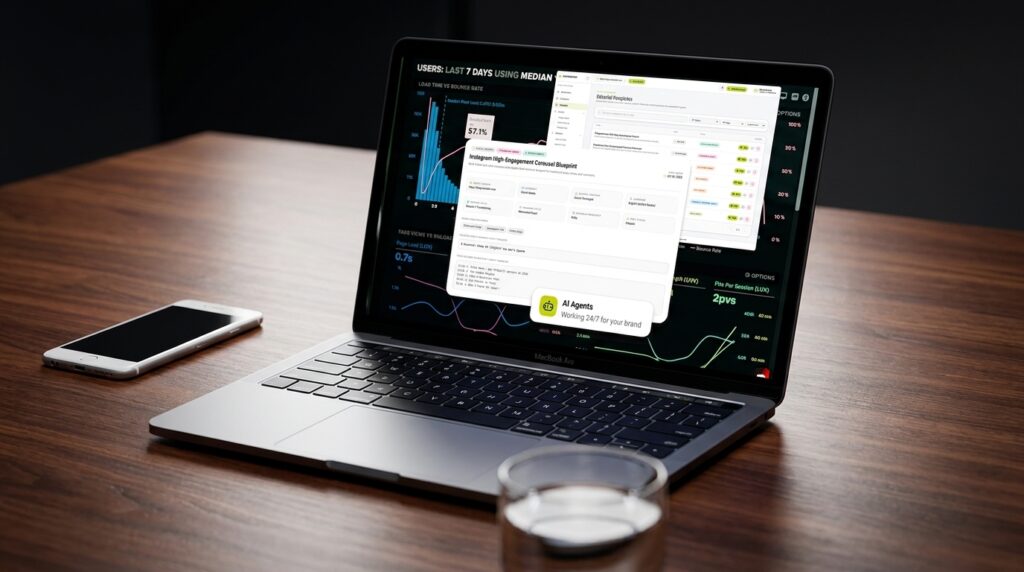
The online ecosystem is undergoing a dramatic restructuring. Consumers bypass traditional standard blue links entirely, choosing direct synthesized answers from artificial intelligence models instead. This profound change requires modern businesses to rethink their digital footprint and master LLM citation structures. An isolated blog post or scattered social update simply cannot secure market share anymore. SynergizeFlow provides a structural solution to this pressing industry challenge.
Shifting toward robust LLM citation structures
Historically, companies built domain authority by optimizing individual web pages for specific keywords to capture clicks. The arrival of synthesized overviews and smart chatbot assistants flipped this dynamic. The modern objective involves establishing your brand as a verified entity that artificial intelligence references directly. Establishing proper LLM citation structures requires moving beyond keyword density.
When users ask complex questions, the system evaluates entity recognition, credibility, and contextual relevance. Machine learning models typically extract information from a tiny fraction of available domains, severely limiting visibility for unoptimized websites. If your online presence remains fragmented, algorithms cannot parse your overall authority. You lose critical exposure in synthesized responses.
SynergizeFlow bridges this structural gap effortlessly. The application shifts your focus from isolated landing pages to cohesive entity recognition, ensuring every published asset supports the overall ecosystem. This connected environment signals high credibility to intelligent crawlers. Organizations achieve dual-layered visibility, maintaining traditional traffic while securing prominent placement within synthesized outputs. Acknowledging this technical paradigm shift represents the crucial first step toward protecting your digital footprint.
Formatting data to strengthen LLM citation structures
Artificial intelligence models crave empirical data and concrete statistics. Traditional search engine optimization often favored long, narrative-driven paragraphs designed to keep readers scrolling. However, synthesized answer systems operate differently. They actively scan texts to extract exact numbers, verified percentages, and authoritative quotes. If your content lacks these specific elements, the algorithmic models will bypass your website in favor of a competitor providing clearer empirical evidence.
Brands must adapt their editorial guidelines immediately. Writers should embed relevant statistics into the first two sentences of a paragraph whenever possible. This bottom-line-up-front formatting approach caters directly to the retrieval mechanisms powering modern search interfaces. Complex ideas should be broken down into scannable bullet points or structured tables. These formatting adjustments drastically reduce the cognitive load on the crawling systems, thereby strengthening the overall LLM citation structures.
Furthermore, leveraging quotes from verified subject matter experts signals high domain authority to the algorithms. When an autonomous agent scans an article and identifies properly attributed quotes, it registers the text as a highly credible source. SynergizeFlow integrates these principles automatically. The system inherently formats articles to feature empirical data, distinct bulleted lists, and structured schema markup, ensuring the final output appeals directly to complex parsing algorithms.
Removing bottlenecks to improve LLM citation structures
Developing content poses a minor hurdle compared to building a unified output ecosystem. Unconnected infrastructures force search engine efforts, blog publications, and social updates to move in conflicting directions. Such misalignment prevents marketing efforts from compounding over time, causing severe operational bottlenecks.
A prominent issue stems from inconsistent publication schedules. Leaders acknowledge the need for regular material, yet manual planning and writing consume vast amounts of time. Furthermore, technical execution without structural integrity inevitably fails. Simply injecting terms into a text achieves nothing if the underlying architecture lacks cohesion. Disconnected campaigns confuse automated crawlers and sophisticated answer engines alike.

Financial waste represents another significant consequence of fragmented operations. Companies pour massive budgets into creating isolated videos, articles, and whitepapers that never achieve proper syndication. When these assets sit disconnected on a server, they fail to generate compounding returns. The algorithms cannot bridge the gap between a standalone video and a deeply buried service page. Unifying these elements under a singular architectural framework prevents budget bleed and maximizes the return on digital investments.
To eliminate these inefficiencies, companies must adopt systems where every asset inherently understands broader campaign objectives. Siloed landing pages dilute core messaging and weaken LLM citation structures. SynergizeFlow guarantees that every generated piece remains securely tethered to a central objective. The software aligns local initiatives, e-commerce pushes, and service outreach under one coherent technical roof.
Deploying specialized agents for LLM citation structures
The core SynergizeFlow architecture relies on eight distinct artificial intelligence agents working collaboratively. This autonomous team manages everything from high-level campaign planning to granular network distribution. Unlike standalone tools, these agents share data continuously, ensuring context flows freely across the entire operation.
- Strategy Agent: The master campaign architect analyzes target audiences and overarching goals to construct a comprehensive multi-channel roadmap.
- Blog Agent: This writer focuses on long-form articles. It implements bottom-line-up-front formatting and data-rich paragraphs to satisfy LLM citation structures effortlessly.
- SEO Agent: A technical specialist researches search intent, optimizes on-page metadata, and builds topical authority across the entire domain.
- Social Agent: This distributor creates platform-native updates tailored perfectly for networks to build powerful unlinked brand signals.
- Page Builder Agent: The designer generates conversion-focused landing pages that mirror the exact goals established by the master strategy.
- Product Agent: The commercial operator writes compelling, high-intent item descriptions required for massive e-commerce scale.
- Chat Agent: Operating endlessly, this conversational interface captures leads and resolves customer inquiries instantly.
- Monitor Agent: The analytical backbone tracks cross-channel performance and surfaces actionable insights for continuous operational improvement.
Delegating operational roles to these specialists allows brands to sustain high publication velocity without compromising strategic alignment. Their seamless collaboration forms the bedrock of an autonomous department.
Executing a four-step workflow for LLM citation structures
Despite the sophisticated technology running in the background, users experience a streamlined four-step workflow. Simplicity remains vital for organizations deploying complex technical strategies without maintaining massive internal departments. The system converts raw business knowledge into a highly distributed digital presence.

The journey begins with Business Input. Operators provide fundamental brand profiles, outline target demographics, and supply core product details. This raw data acts as the absolute source of truth for the entire platform. The second phase involves the Campaign Builder Strategy. The software analyzes the provided inputs and constructs a customized blueprint designed to achieve specific growth objectives.
Following strategy approval, the agents execution phase begins. The eight specialists take complete control. They autonomously draft articles, construct landing pages, format social updates, and optimize technical metadata. The final sequence triggers the Distribution Layer. The platform automatically pushes the finalized assets across necessary channels, ensuring they meet the technical requirements of retrieval-augmented generation (RAG) systems. Organizations seeking deeper technical details can review how to deploy SynergizeFlow properly within their current environment.
Adapting LLM citation structures across diverse sectors
A connected ecosystem easily adapts to serve wildly diverse commercial models. Because the initial operator input dictates the foundational strategy, the specialists adjust their tone and formatting to match exact industry requirements. This versatility proves vital for enterprises ranging from local retailers to expansive international agencies.
Local operators prioritize regional visibility and proximity-based customer acquisition. The software achieves this by maintaining consistent local signals, ensuring the brand appears prominently in synthesized neighborhood recommendations.
E-commerce brands require an entirely different execution model. The software pivots to generating highly optimized product descriptions at massive scale, capturing high-intent commercial queries to drive immediate sales. Additionally, the system automatically embeds necessary structured data to highlight pricing, availability, and customer reviews. This extra layer of technical formatting feeds directly into the algorithms, allowing them to recommend specific products with absolute confidence.

Service providers prioritize trust and domain authority above all else. The autonomous writers construct detailed case studies and comprehensive answers that convert casual visitors into dedicated clients. Marketing agencies utilize the software as a massive scale multiplier. These agencies deliver weekly articles, technical audits, and performance dashboards across dozens of client accounts simultaneously, dramatically increasing revenue potential without expanding human headcount.
Integrating LLM citation structures into existing infrastructure
Automation platforms only succeed when they connect flawlessly with the tools an organization already uses. Developers engineered SynergizeFlow to integrate deeply with standard digital infrastructures. This ensures the transition toward autonomous marketing remains entirely non-disruptive to daily operations.
The software connects natively with WordPress and WooCommerce to handle content management directly. The specialized agents publish optimized articles and item descriptions directly to the live environment, eliminating manual data entry completely. Removing the intermediary copy-paste steps allows teams to maintain a higher publication velocity while ensuring perfect metadata implementation upon launch.
The distribution layer connects directly with major networks, pushing messaging outward with perfect consistency. The platform crafts native updates that adhere precisely to algorithmic formatting rules. Centralizing these connections guarantees that messaging remains unified across every consumer touchpoint. Companies attempting to consolidate their digital footprint should evaluate the connected architecture of SynergizeFlow to confirm precise technical compatibility.
Securing the future with LLM citation structures
Transitioning from fragmented tools to a unified growth environment is no longer optional for companies aiming to secure long-term digital survival. As consumer behavior shifts away from traditional clicks toward direct synthesized answers, maintaining a structured online presence is absolutely imperative. Isolated campaigns actively harm a brand’s ability to achieve recognition as a credible entity.
SynergizeFlow delivers a comprehensive, structural answer to this massive industry shift. Leveraging eight specialized operators within a streamlined four-step workflow ensures every piece of published material works together as a cohesive system. This methodology eliminates traditional operational bottlenecks and ensures your visibility compounds dramatically over time.
Integrating an autonomous marketing team allows organizations to reclaim valuable time while simultaneously expanding their digital reach. Establishing proper LLM citation structures remains the ultimate differentiator. The future of online visibility belongs to companies that optimize their properties for deep machine comprehension rather than just human clicks.